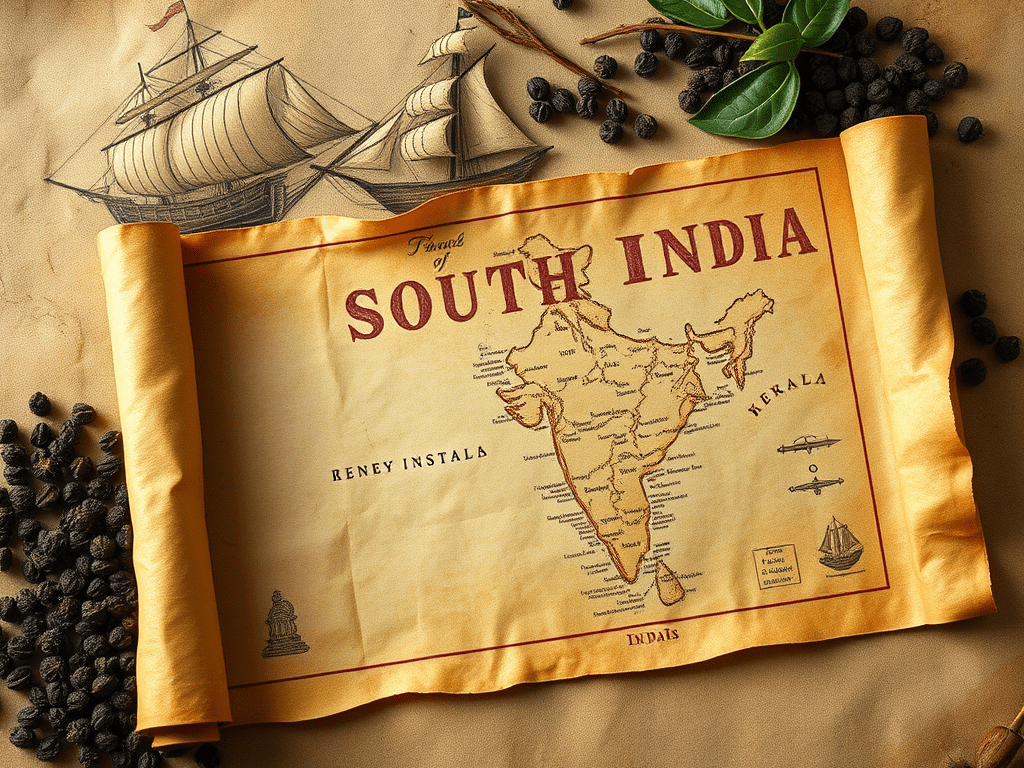

These are the factual events that took place based on which the previous chapters were written.
3000 BCE: Sumerian records depict Kerala as the garden of spices – The Malabar forests. Ancient Babylonian, Syrians and Egyptians also traded with them.
1213 BCE: Ramses 2 died. It was later found that his mummy was discovered with Pepper in his nose. Note that Ramses 2 is the villain from the movie The Ten Commandments
4th Century BCE(400 to 301 BCE): Greece was aware of Pepper.
323 BC: After Alexander died, Greeks sailed all the way from their strategic stronghold of Alexandria to the western coast of India to establish the Spice trade.
30 BCE: Rome annexed Egypt and took control of the Spice trade. According to the Roman geographer Strabo, the early empire sent a fleet of around 120 ships on an annual trip to India and back. Taking advantage of early monsoon winds.
1st Century BCE to 5th Century CE: The ancient port of Muziris of the Chera dynasty actively traded with the Romans. Pliny (Roman author) also complains, “There is no year in which India does not drain the Roman Empire of 50 million sesterces.”
408-410 CE: Alaric, (king of the Visigoths) attacked Rome. They demanded a ransom that included 3000 pounds of pepper. They still invaded Rome, despite his ransom demands being met.
410 CE to 800 CE: Marks the dark ages. With the fall of Rome, the dark ages crept up and the knowledge of spices slipped out.
600 CE: Nomadic Arabs and Persians gained control over the Spice trade and these lands flourished. To market the spices, the Arabs and the Persians traders started spreading stories about the dangers of harvesting pepper.
9th century (801 AD – 900 AD): Venice rose with great naval power. They dominated the distribution of pepper from Alexandria. They purchased it from the Arabs and Persians and sold it to the rest of Europe. Pepper became a status symbol. The greater the wealth of the household the more spices they would use in their food. It also became a stable currency, better than money. Peppercorn was used for paying rent at some point.
1453 CE: Constantinople fell. With that, the power of Venice waned. Portugal and Spain gained power.
1490 CE: Pero da Covilha was a Portuguese spy who came to India. Taking back the information to his home country.
1498 CE: In the name of Portugal, Vasco da Gama came to India, sailing around Africa. He was able to usurp the Arab traders to gain Monopoly.
1511 CE: Lisbon became one of the wealthiest cities in Europe, due to Portugal’s strong monopoly over the Spice trade.
1588 CE: Dutch gained freedom from Spanish.
1595 CE: Houtman of Netherlands(Dutch) was able to make to Indonesia, thus ending Portugal’s monopoly over spice trade.
1602 CE: Dutch started its spice trade. Dutch East India Company was established.
1605 CE: The Dutch drove away Portuguese from Moluccas(Archipelago in Indonesia).
1661 CE–1663 CE: The pepper ports of Malabar began to trade increasingly with the Dutch.
1670 CE: Dutch control over spices weakened. This is because of competition from the British East India Company who cultivated Spices from its various colonies and decline of trade with Japan.
17the century: Over spicing was stopped in the 17th century by the advent of the French cuisine.
1741 CE: The ruler of Travancore, Martanda Verma, defeated the Dutch and regained control of Malabar. (Battle of Colachel). Thus losing their control over pepper.
1797 CE: Jonathan Carnes of Massachusetts sailed into the New York waters with Sumatran pepper worth US $100,000. This gave rise to Salem and Massachusetts as a spice trade centre, and the creation of a global spice route.
1799 CE: Dutch East India Company was dismantled.
19th Century: London emerged as the world’s most important spice centre. By then, increased production had driven pepper prices down, making it affordable even to the man on the street. Pepper no longer remained the exclusive commodity of the rich and famous.
Notes:
Typically middle ages spans from the 500s to the 1400s or 1500s CE. The early middle age from 410 to 800 is considered to be the dark age. This is when the Roman empire fell.
1568 – 1648: Dutch fought for freedom and gained freedom in 1588 from Spanish.
1661–1663: The Portuguese lost most of their valuable Indian Ocean trade to the Dutch and the English. They took advantage of the Spanish rule over Portugal during the Iberian Union (1580–1640), and occupied by force almost all Portuguese interests in the are. The pepper ports of Malabar began to trade increasingly with the Dutch in the period
— The End —

 An Average Being
Leave a comment